

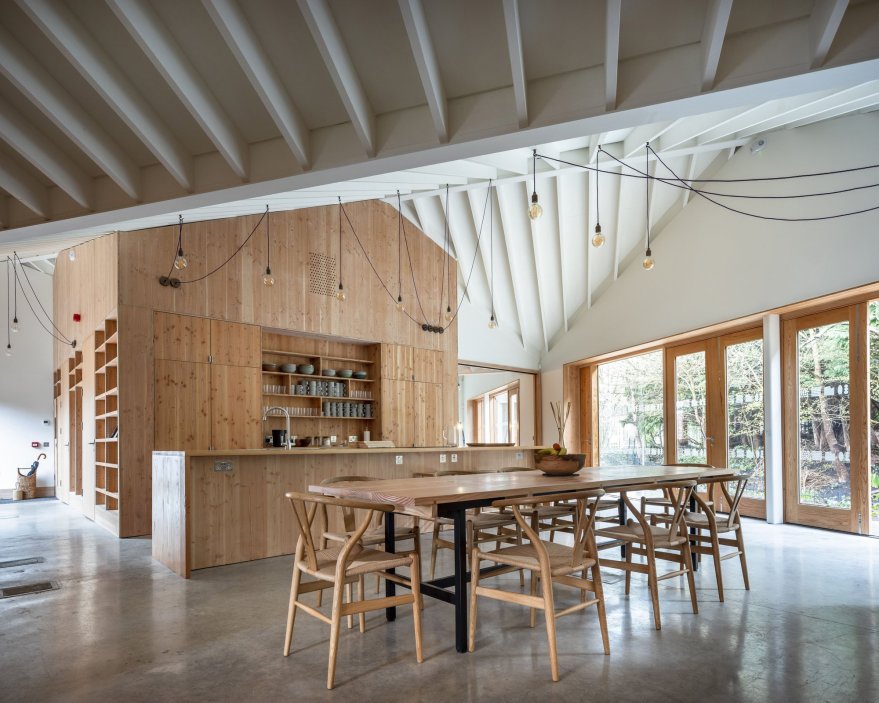
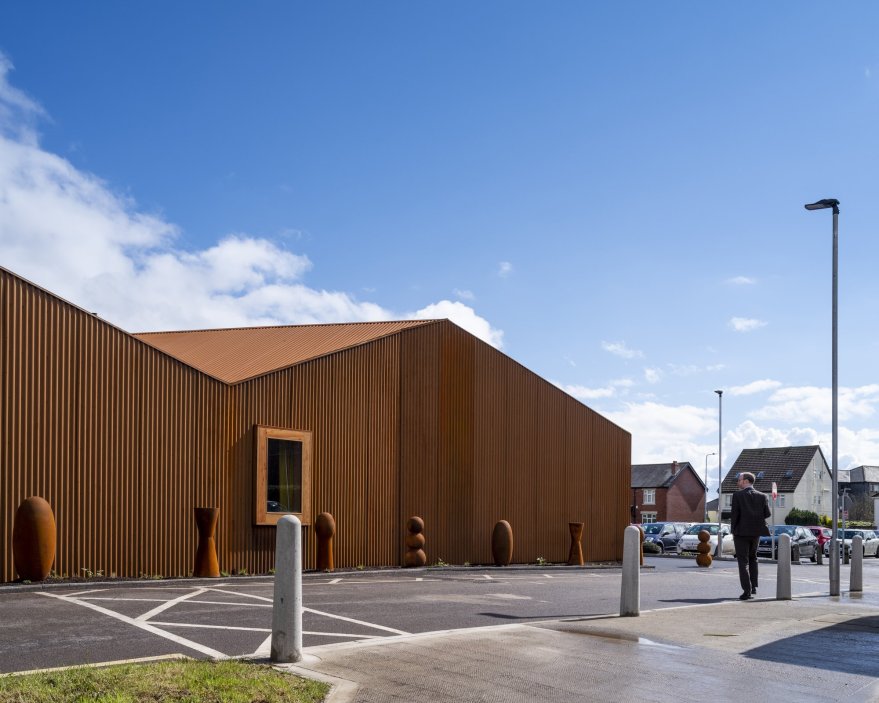
In July 2018, Laura Lee, chief executive of Maggie’s, spoke about her experiences in commissioning new centres. Previously a clinical specialist nurse, Lee met Maggie Jencks when Maggie was diagnosed with cancer and has been involved with the charity since its inception. Lee spoke about her role as an architect’s client, learning what works and what is important for this evolving, hybrid typology. Trusting architects whilst understanding them and their drawings was part of this process. Being able to learn from past mistakes has been invaluable and Lee acknowledged the rarity of commissioning so many buildings from a variety of architects who all started with the same brief but have responded with equal variety – as we will examine in successive posts.
Maggie’s provides free practical, emotional and social support to people with cancer and their family and friends, following the ideas about cancer care originally laid out by Maggie Keswick Jencks. Built in the grounds of NHS cancer hospitals, Maggie’s Centres are places with professional staff on hand to offer the support people need.
https://www.maggiescentres.org/about-maggies/
Often viewed as architectural jewels, Maggie’s Cancer Care Centres catch one’s attention despite their adjacency to burgeoning hospitals. There are currently 20 centres in the United Kingdom, and the hope is that each of the 60 hospitals designated as cancer treatment centre sites will have a Maggie’s. However, Maggie’s must be first approached by the hospital and invited to provide a centre. Whilst many hospitals are keen, they may lack certainty over their own futures. One solution is providing a temporary centre. In Cambridge, Maggie’s occupy a ground-floor apartment designed as nurse’s accommodation on the hospital site. Whilst in Cardiff, Dow Jones Architects have recently completed an interim centre. In the case of the Manchester centre, Fosters fought for a better site for their permanent centre by a developing a master plan for the whole hospital.
Lee would love for Maggie’s approach of uplifting, hopeful design to be rolled out across hospitals but there a number of obstacles. Once commissioned, NHS facilities are under huge time pressures to be delivered as were often ‘needed yesterday’ which limits the amount of time for good design to evolve. Additionally, those doing the commissioning, the higher levels, trust what they know: reception desks, rows of chairs, corridors to process people, so can be reluctant to explore other solutions. However, Lee has experienced first-hand the influence of carefully designed and uplifting architecture, with visitors being able to talk more intimately and openly with staff around a kitchen table than in a hospital setting. Maggie’s Centres exude a sense of worth onto the individual, in the face of their illness. Thus, the role of the architecture is to support and enhance the programme, one of persuasion and encouragement, and must be examined with subtly and nuance.
 charlottestuart.design.blog